
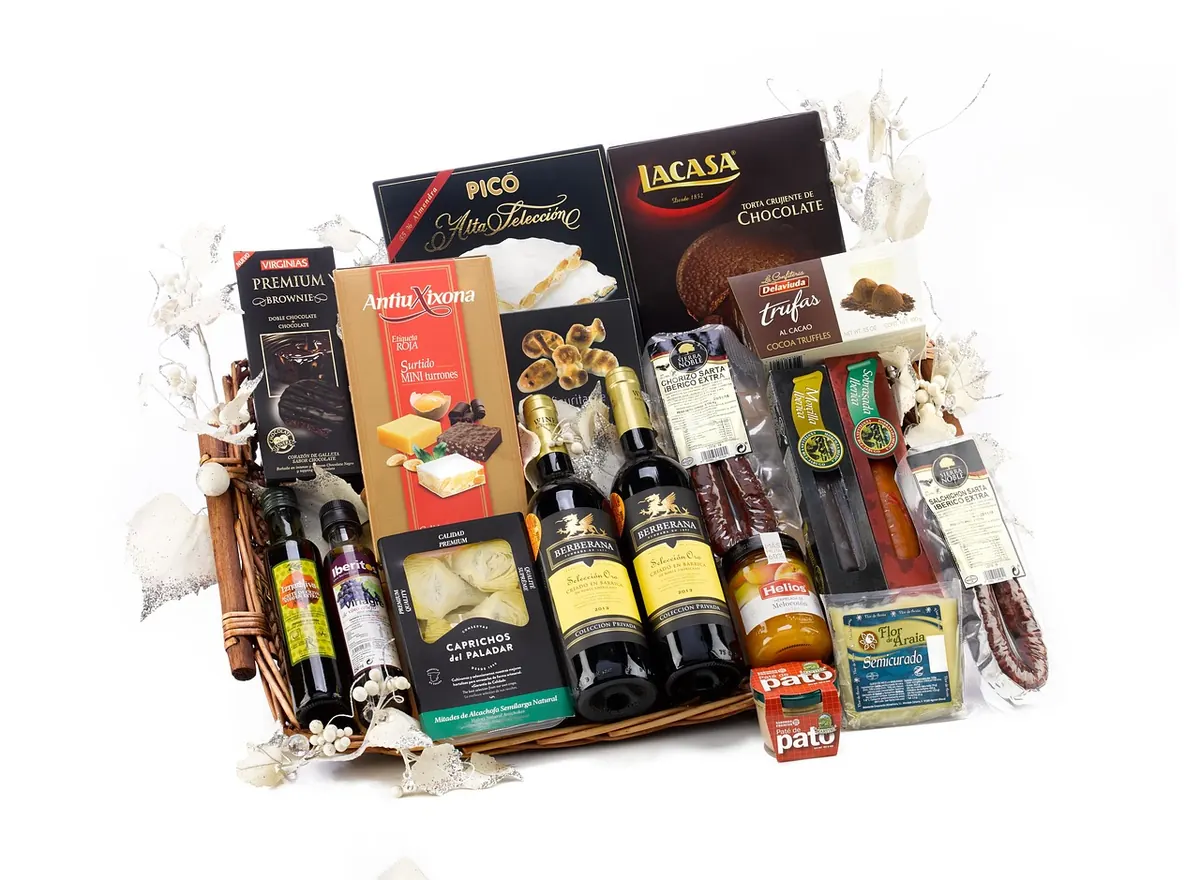
Two hampers on the kitchen table in mid-December. One arrived in a printed box with a ribbon and a card listing every jar and packet inside. The other is a plain carton you filled yourself over three weekends, padded with tissue paper saved from last year. Both will make someone happy. The difference is in what they cost you — in money, in time, and in how fresh they are when the lid comes off.
What follows is a straightforward comparison of the two routes, without a house preference for either.
Cost: where the money actually goes
A pre-made hamper bundles several things into one price: the contents, the packaging, someone's time spent tasting and selecting, the fulfilment, and a margin. Good producers earn that margin. A box built by a small maker who has spent the autumn choosing the right cheddar and the right chutney is worth more than a generic gift set padded with a hot chocolate sachet and a packet of fudge. The contents list tells you which one you're looking at.
The trap is filler. Weight and volume aren't value. Two good jars of preserve, a wedge of cheese, a bag of coffee and a box of biscuits make a better hamper than a large box filled with twelve items nobody will finish.
Building your own puts you in charge of the budget, which is the point. You can spend on four excellent things rather than twelve average ones. But there are costs that never appear on a price tag:
- Packaging. A sturdy box, tissue, wood wool, ribbon and a handwritten card add up — and a flimsy box that arrives crushed is a false economy.
- Multiple delivery charges. Buy cheese from one producer, preserves from another and coffee from a third, and you're paying three shipping fees.
- Your time. Two or three evenings of browsing, comparing, chasing dispatch confirmations and assembling.
- Substitutions. When your first-choice chutney sells out in the first week of December, the replacement is often pricier or bought locally at a premium.
A reasonable rule: building your own gives better value per item when you're making one or two hampers and can shop partly in person. Pre-made comes out ahead when you're sending six hampers to six addresses and want one order, one payment and one tracking number.
Customisation: who is actually receiving this?
Pre-made hampers are curated for a broad palate. That's deliberate, and it's why they work so well for a client, a neighbour or a teacher. It's also why they can miss badly for someone who doesn't drink, doesn't eat pork, avoids gluten, or has quietly stopped eating sugar.
A custom box solves most of that. Instead of guessing, you buy the marmalade they mention every year and skip the marzipan. If you're buying for a whole household, you can build two smaller hampers — one savoury, one sweet — for roughly what a single large box would cost.
Build your own when
- The recipient has allergies, intolerances or a restricted diet you know well.
- They have one specific enthusiasm — cheese, coffee, chilli, tea — and would rather have three excellent versions of it than a mixed box.
- You want to include something non-commercial: a jar of your own jam, a loaf from the bakery you both use, honey from the Saturday market.
- You need the hamper to arrive on a particular day and can plan around it.
One caution. If someone has a serious allergy, don't rely on a website's dietary labels alone. Contact the producer and ask about the kitchen, the shared equipment and the risk of cross-contamination. For anything medical or diet-related, their own doctor or dietitian is the right person to advise, not a hamper shop.
Freshness: the real dividing line
This is where the two routes differ most, and it's easy to overlook until a box of soft cheese has spent a weekend in a parcel depot.
Pre-made hampers are built around shelf-stable items: biscuits, preserves, chocolate, tea, nuts, cured meats, and often a waxed or vacuum-sealed cheese. That's not laziness — it's design. The hamper may sit in a warehouse, then a van, then under a tree for a week before anyone opens it.
A custom hamper lets you mix long-life and fresh. A sourdough loaf, a ripe soft cheese, a chutney made last month, a bag of roasted coffee. Lovely, but the timing becomes your responsibility, and fresh items shorten the window sharply.
A workable method
- Split your list into "keeps for months" and "best within days".
- Buy and pack the long-life items first, a fortnight out if you like.
- Add perishables in the final 48 hours before handover.
- If you're posting, leave out soft cheese, fresh bread and anything chilled unless the recipient will definitely be home on the delivery day.
Delivery timing and the week before Christmas
Order deadlines matter more than most people expect. Small producers often close their Christmas books in early or mid-December and dispatch in a narrow window. Courier networks are at their busiest, and a next-day service is not reliably next-day in the final fortnight.
With a pre-made hamper you inherit someone else's logistics. The producer has already worked out how to pack a jar so it doesn't smash, and you get one dispatch date and one tracking number. That's worth a great deal if you're sending to an address you can't easily reach.
Building your own makes you the coordinator. If everything comes from one shop, fine. If not, you may have three or four parcels arriving on different days, possibly to different addresses. Put the assembly date in your calendar and order the perishables last. And check whether the recipient will actually be in — a hamper left on a wet doorstep is a wasted hamper.
A quick way to decide
- Count how many hampers you need. Above three or four, pre-made usually wins on effort and timing.
- Write down the recipient's genuine preferences and any dietary restrictions.
- Set a ceiling for the whole thing, packaging and postage included.
- Work backwards from the date it needs to arrive, not the date you plan to order.
- Decide honestly who will assemble it. If the answer is "me, on the 23rd", buy the box.
Before you click buy
For a pre-made hamper, read the full contents list rather than the marketing description, check the dispatch window, and ask whether substitutions are made if something runs out. A good producer will tell you plainly.
For a build-your-own, order the box and packing materials first, keep a written list so you don't buy two mustards and no cheese, and buy heavy or breakable items locally if you can. It also helps to choose a theme — an all-Italian box, a breakfast box, a cheese and cider box — because a clear brief makes choosing faster and the finished hamper look intentional rather than assembled from odds and ends.
There's a middle path worth considering, and it's what many people end up doing: start with one small pre-made hamper as the base, then add two or three personal items. You get the presentation and the delivery reliability, plus the part that actually says something about who you're giving it to. If you're buying several hampers as client gifts and want to claim them as a business expense, check the rules with an accountant rather than assuming.